Pay in installments of $5.48 with
 ,
,
 and
and

Shipping Estimate
USA
- USA
- CAN
- USA
- CAN
Ships within 48 hours · Estimated delivery Jun 30 - Jul 5
 Promo Codes Available:
For Your Every Summer RSVP, with Code: SUMMER15
Description
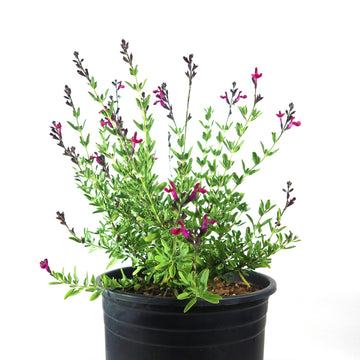
sage plant pot Autumn Sage ‘Salvia greggii’The Autumn Sage, known as Salvia greggii, is a popular perennial woody shrub known for its ability to thrive in hot, arid environments and provide vibrant color from spring through fall. Valued for its extended bloom season, drought tolerance, and ease of care, this small shrub is an excellent choice for xeriscaping, borders, and containers. Its versatility in garden settings and pollinator friendly flowers make it a favorite among gardeners in warmer
The Autumn Sage, known as Salvia greggii, is a popular perennial woody shrub known for its ability to thrive in hot, arid environments and provide vibrant color from spring through fall. Valued for its extended bloom season, drought tolerance, and ease of care, this small shrub is an excellent choice for xeriscaping, borders, and containers. Its versatility in garden settings and pollinator-friendly flowers make it a favorite among gardeners in warmer regions.
The Salvia greggii has several other common names such as Gregg Salvia, Cherry Sage, Gregg's Sage, and Texas Sage. These names highlight its extended blooming season and native habitat in the southern United States and Mexico.
The Salvia greggii can grow up to 3 feet tall and wide. This compact size makes it suitable for smaller gardens, borders, or container plantings.
The foliage is semi-evergreen in warmer climates but may shed leaves in colder conditions. It can also be pruned to maintain a denser and more formal shape if desired.
The flowers of Autumn Sage are its most defining feature. Bright, tubular two-lipped blooms appear in colors ranging from red, pink, purple, and white, with red being the most common.
The flowers bloom in clusters at the ends of stems and provide an almost constant display from spring through fall, with the heaviest blooming occurring in the autumn. These tubular blooms are perfect for attracting hummingbirds and other nectar-feeding pollinators. The flowers also add a striking contrast to the plant's green foliage, giving it a vibrant, colorful appearance.
Salvia greggii is well-known for its ability to attract a wide variety of pollinators. Hummingbirds, butterflies, and bees are frequent visitors to its nectar-rich blooms. Gardeners looking to create a wildlife-friendly garden will find Autumn Sage to be an excellent choice for supporting local pollinator populations. Its long blooming season ensures that there is a continuous food source for these important species, especially during the fall when other nectar sources may be scarce.
One of the additional benefits of Autumn Sage is that it is non-toxic to humans and pets. This makes it a safe option for homes with children, dogs, or cats.
When and How to Water Your Autumn Sage
When it comes to watering this plant, it's essential to strike a balance. While it's drought-tolerant once established, regular watering is crucial during its initial growth phase to help it establish a strong root system.
In the spring and summer, during the autumn sage's active growing season, it's best to water deeply but infrequently almost 1 inch per week. This encourages the roots to penetrate deeper into the soil, making the plant more resistant to droughts. However, avoid overwatering because it can cause root rot and other problems.
As autumn approaches and temperatures start to cool down, you'll want to adjust your watering routine. Watering frequency should be reduced in the fall as the plant's growth slows. Monitor the soil moisture and only water when the top inch or so of soil is dry.
During winter, when the plant goes dormant, reduce watering even further to prevent waterlogged soil, which can harm the plant during its dormant period. Remember, it's always better to underwater than overwater, especially during the cooler months.
Light Requirements – Where to Place Your Autumn Sage
If growing indoors, Autumn Sage thrives in bright, indirect light. Place your potted plant near a sunny window where it can receive at least 4-6 hours of sunlight daily. If natural light is limited indoors, consider supplementing with a grow light to ensure the plant gets adequate light for healthy growth. Rotate the plant occasionally to promote even growth on all sides.
For outdoor cultivation, this Salvia greggii is a sun-loving plant that flourishes in full sun. Choose a location that receives full sunlight for the majority of the day. Ideally, provide the plant with 6-8 hours of direct sunlight daily.
In regions with extremely hot temperatures, some afternoon shade can be beneficial to protect the plant from scorching sun rays.
By understanding and meeting the light requirements of Autumn Sage, both indoors and outdoors, you can help your plant thrive and produce its beautiful, colorful blooms throughout the growing season.
Remember, providing the right amount of light is key to ensuring the health and vitality of your Sage plant.
Optimal Soil & Fertilizer Needs
The Salvia greggii thrives in well-draining soil that is slightly acidic to neutral. A sandy or loamy soil mix works well for this plant, as it prevents waterlogging and allows the roots to breathe. Before planting, amend the soil with organic matter like compost to improve its texture and fertility. This helps provide essential nutrients and promotes healthy root development. Instead, make or buy a well-draining potting mix, or ideally use our specialized potting mix, opens in a new tab that contains 5 natural substrates and mycorrhizae to promote the development of a strong root system that helps your sage plant to thrive.
When it comes to fertilizing Autumn Sage, a balanced NPK fertilizer with equal parts nitrogen, phosphorus, and potassium can support the plant's growth and blooming. Apply a slow-release fertilizer according to the package instructions in early spring, just as new growth begins. Avoid over-fertilizing, which can result in excessive foliage growth at the expense of flowers. During the growing season, you can supplement with a diluted liquid fertilizer once a year to encourage continuous blooming and overall plant health.
Hardiness Zones & More
When growing indoors, Autumn Sage can adapt well to a range of temperatures typically found in most homes. It thrives in warm temperatures between 55-75°F during the day and slightly cooler temperatures at night. Maintaining moderate humidity levels around 40-50% can help mimic its natural habitat and promote healthy growth. To increase humidity indoors, you can use a humidifier or place a tray filled with water and pebbles near the plant.
For outdoor cultivation, your stunning Salvia greggii is well-suited for USDA hardiness zones 6 to 9. It can tolerate temperatures as low as 10°F but may benefit from protection during harsh winter conditions, especially in colder regions. During the growing season, provide the plant with temperatures ranging from 65-85°F for optimal growth and blooming. Autumn Sage is relatively drought-tolerant once established but appreciates regular watering during dry spells.
Autumn sage plants prefer a moderate level of humidity, making them suitable for both indoor and outdoor environments. However, they may benefit from occasional misting or placing a humidifier nearby if grown indoors in drier climates.
Wildlife - Autumn Sage attracts the following Friendly-Pollinators
Salvia greggii is well-known for its ability to attract a wide variety of pollinators. Hummingbirds, butterflies, and bees are frequent visitors to its nectar-rich blooms. Gardeners looking to create a wildlife-friendly garden will find Autumn Sage to be an excellent choice for supporting local pollinator populations. Its long blooming season ensures that there is a continuous food source for these important species, especially during the fall when other nectar sources may be scarce.
Toxicity: One of the additional benefits of Autumn Sage is that it is non-toxic to humans and pets. This makes it a safe option for homes with children, dogs, or cats.
Autumn Sage Propagation
You can propagate your Autumn sage can by cuttings. In late spring to early summer, take 4–6-inch cuttings from healthy stems, ensuring they have a few sets of leaves. Remove the lower leaves, dip the cut end in the rooting hormone, and place the cutting in a well-drained potting mix. Maintain consistent moisture in the soil and place the cutting in a warm, bright location that is not directly exposed to sunlight. With proper care and attention, the cuttings should develop roots in a few weeks, ready to be transplanted into larger pots or the garden for continued growth.
Key Takeaways
- Autumn Sage (Salvia greggii) is a beautiful and versatile plant known for its long-blooming season with vibrant flowers and aromatic foliage.
- It has colorful tubular flowers in shades of red, pink, purple, and white, attracting pollinators like bees and butterflies.
- With proper soil drainage, full sun to partial shade, and moderate watering once established, autumn sage can easily be well-maintained.
- Prune the plant in early spring to promote bushier growth and deadhead spent flowers to encourage continuous blooming.
- Watch out for common pests like aphids and spider mites, as well as issues such as powdery mildew and root rot, taking prompt action to address any problems.
- Additionally, Autumn Sage is a low-maintenance and rewarding plant for gardeners, offering long-lasting blooms and attracting beneficial wildlife to your outdoor space.
Shipping Notes
- Free Standard Shipping on $100+ Orders to the USA.
- Except Preorder products are shipped in 48 hours.
- Delivery to the USA:
- Standard Shipping : 3-10 business days
- If time is of the essence, please consider selecting expedited delivery for faster service.
Exchange/Return Notes
- We offer a 30-day return/exchange service after receiving.
- Final sale items are not eligible for returns or exchanges.
- To process your return/exchange, please contact us at [email protected]
- Please click here for more details>>> Return & Exchange Policy